


Cryptogram: Word Logic Puzzles
4.610.06K Reviews
App Specs
- Version
- 3.6.1
- Updated On
- License
- Free
- Downloads
- 10,000,000+
- Developer
- Gismart
- Categories
- Word
- Platform
- Android
Screenshots

 Analysis by AppCompare
Hey there, puzzle fans! If you're like me and can't resist a good brain teaser, then you're in for a treat. I recently got my hands on Cryptogram: Word Logic Puzzles, and I've been absolutely hooked. It's one of those apps that just sucks you in, and before you know it, an hour has flown by. Curious about what makes it so addictive? Let me break it down for you.
What the game asks you to do
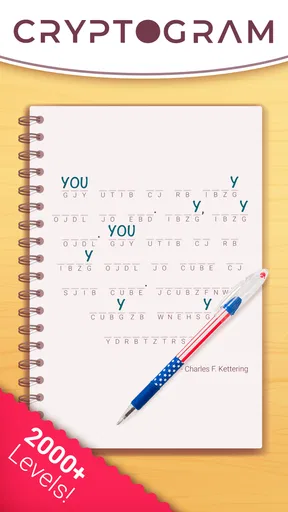
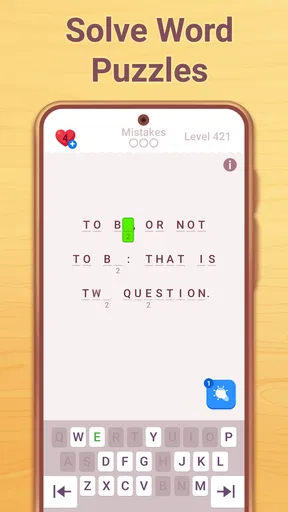
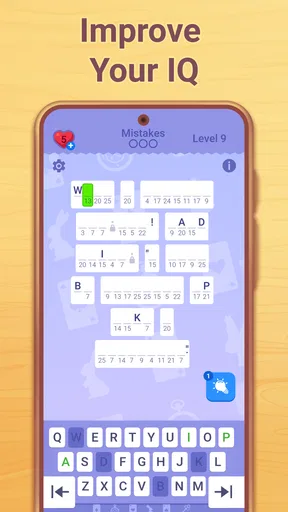
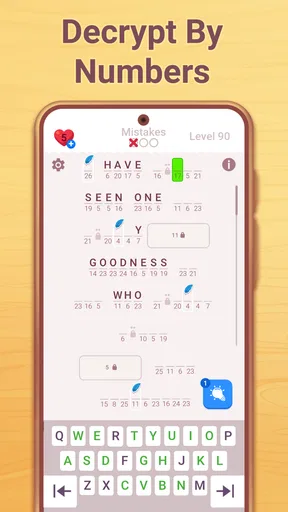
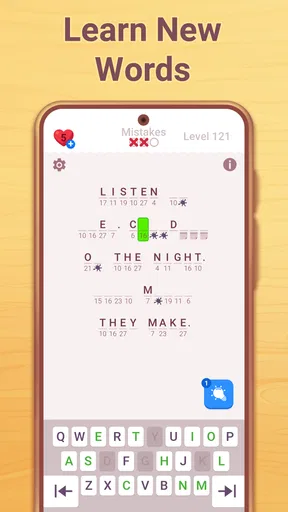
At its heart, this is a word puzzle built around decoding. You work through a string of substituted letters and use patterns, word lengths, and familiar language to uncover the intended quote. I find the appeal comes less from knowing cryptography and more from spotting clues: a short word may suggest a common connector, while a repeated symbol can reveal a repeated letter elsewhere in the sentence.
That makes the game approachable without making every puzzle automatic. If you enjoy crosswords, you may already be used to using context to fill gaps, but here the task is different: you are solving a linked letter code rather than answering separate clues. Compared with a conventional word search, there is less scanning for a visible word and more reasoning about how letters fit together across a whole phrase. I like that change of pace, though anyone who mainly wants quick vocabulary quizzes may prefer a game with more direct questions.
What's the Deal with Cryptogram?
So, what exactly is Cryptogram: Word Logic Puzzles? In a nutshell, it's a game where you decrypt famous quotes by swapping letters around. Each puzzle presents a cryptic jumble of letters, and your job is to crack the code. It's like a crossword puzzle met a codebreaker and had a really smart baby.
The app features a sleek and intuitive design that makes it easy to dive right in. The developers really nailed the user interface, which is a big plus for anyone who's new to this type of game. You don't need a PhD in cryptography to enjoy it, but a love for words and puzzles definitely helps!
Why You'll Love It
One of the things I love about this app is its versatility. Whether you have five minutes or an hour, you can easily pick up and play. The puzzles range from easy to challenging, so there's something for everyone. Plus, the satisfaction of cracking a particularly tough code is second to none. Trust me, you'll feel like a genius.
For a realistic everyday example, I would open it while waiting for a coffee or sitting on a train and aim to make progress on one quote, rather than beginning a session expecting to finish a whole collection. A useful way to avoid random guessing is to note which letter substitutions you feel confident about, then check whether they still make sense in several words. A single plausible guess can look convincing in isolation; if it creates awkward letter patterns throughout the rest of the quote, it is probably worth reconsidering.
Worth Reading Before You Choose

Baby Panda World Brings Quick Play to Modern Phones, but Its Game Library Feels Busy

ESPN’s Live Game View Makes Following Close Games Easier

QuizzLand Review: A Good Fit for Short Trivia Breaks, Not Every Player

Basketball Stars: Multiplayer Is Fast, but Can It Recover When Matches Go Wrong?

WEBTOON Turns Phone Updates Into a Better Reading Routine

Link to Windows Runs on Shared Habits, Not Social Feeds
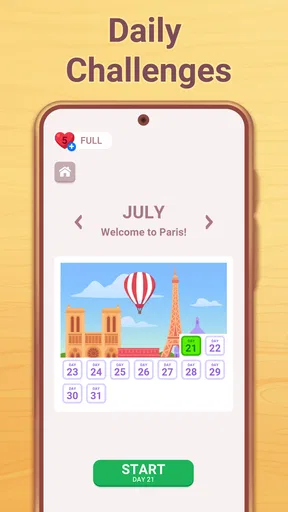
Another highlight is the variety of quotes you get to decode. From ancient philosophers to modern-day thinkers, Cryptogram serves up a treasure trove of wisdom. It's like getting a mini history lesson with each puzzle. And if you're a bit of a perfectionist, the app keeps track of your progress and lets you revisit puzzles to improve your time.
Who is likely to enjoy it?
I would recommend it most to people who like language puzzles but do not always want to sit down with a newspaper or a full crossword. The quote format gives each puzzle a natural endpoint, and the familiar structure of a sentence provides a foothold when the letter substitutions initially look opaque. It can also suit someone who enjoys quiet solo play: the challenge comes from noticing patterns at your own pace, not from racing another player.
It is a less obvious fit for players who want a social word game, a story-driven adventure, or a strict test of spelling knowledge. A cryptogram rewards deduction and patience, so a player who dislikes pausing to think through letter patterns may find the pace slow. Likewise, if you want a fresh grid of unrelated words rather than a sentence that gradually comes into focus, a standard word-search game may be a better match.
How it fits among word games
Compared with crosswords, the main trade-off is that you are not supplied with clues for individual answers; the sentence itself is the clue. Compared with an anagram game, you are not simply rearranging a handful of letters until a word appears. Each deduction can affect several positions, which gives the puzzle a satisfying chain-reaction quality, but also means a mistaken assumption can make the whole quote harder to read.
That structure is why I would treat it as a different kind of mental break rather than a replacement for every word game. A crossword is better when I want varied trivia prompts, and a word search works better when I want a more visual, low-effort activity. This game is strongest when I have enough attention to compare repeated patterns and test a theory, even if I only have a short window to play.
A practical way to handle a stubborn quote
When I get stuck, I try not to fill every uncertain letter just to make the sentence look complete. I start with short words and repeated patterns, then look for substitutions that would explain more than one part of the quote. If a guess produces a familiar-looking phrase but clashes with another word, I back up rather than building further guesses on top of it. This keeps the puzzle from turning into a string of lucky taps and makes the eventual solution feel earned.
Revisiting completed puzzles for a better time can add a second goal, especially if I already know the quote and want to see whether I can recognize its structure more efficiently. The trade-off is that replaying a familiar answer tests recall as much as decoding skill. I would use that option for a quick personal challenge, not as a measure of how well I can solve a brand-new cryptogram.
What changes mean for players
Gismart is the developer, and the current version is 3.0.0. The game was released on August 18, 2023, so those version and release details offer a clear snapshot of its current place as a mobile word puzzle. I would not assume that a version number alone means the basic solving experience has changed in a particular way. For someone already playing, the useful question is whether the current build remains comfortable on their device and whether the familiar puzzle style still suits them.
For a new player, the practical takeaway is simple: this is an established, focused puzzle game rather than a promise of a different genre. The available version gives you the same central appeal described here—working out letter substitutions to reveal quotes—so you can judge it by whether that loop feels satisfying. Future changes could bring adjustments, but I would treat those as something to assess when they appear, not as a reason to install it today.
Cost, age suitability, and everyday expectations
The game is free to download, with in-app purchases ranging from $0.99 to $99.99 per item. That wide range makes it sensible to check any purchase prompt carefully and decide whether an optional purchase is worth it to you before spending. I would begin with the free experience and see whether I enjoy the puzzle rhythm; there is no need to commit money simply because a difficult quote takes longer than expected.
It is rated for Everyone, which makes its word-based puzzle format broadly accessible. The average rating is 4.5 from around 373,000 ratings, and it has more than 10 million installs. Those figures suggest that plenty of people have tried it, but they do not tell me whether its particular style will click with you. I would put more weight on whether you enjoy solving a sentence through deduction than on popularity alone. The current version is 3.0.0 and requires Android 10 or later.
A few things to keep in mind
While Cryptogram: Word Logic Puzzles is mostly a smooth ride, it does have a few bumps. Occasionally, you might find a puzzle that's just a bit too tough, which can be frustrating. But hey, that's part of the challenge, right? Also, the free version does have ads, but they're not too intrusive. If you're really into it, you might consider the ad-free version to enhance your experience.
The main limitation for me is that a quote can become a wall when I cannot find a useful starting pattern. On those occasions, the game’s central strength—reasoning through connected letter substitutions—also creates its friction, because one uncertain guess may affect several parts of the sentence. I would take a short break rather than keep tapping at random. Coming back with fresh eyes is often a better approach to this kind of puzzle than forcing a solution when concentration has dipped.
Another point to bear in mind is that the quoted material is part of the experience, not just decoration. If you mainly want puzzles with objective clues and answers unrelated to quotations, this format may not hold your interest for long. If you enjoy seeing a sentence emerge from a code, however, the theme gives each solve a small moment of payoff. That difference is a better guide to whether you will enjoy the game than the broad label of a word puzzle.
What I would watch for
If you are deciding whether to keep playing over time, I would pay attention to whether the puzzle difficulty stays enjoyable for you and whether revisiting completed quotes adds enough value. The current version is a concrete reference point, but it is not proof of what future releases will contain. I would look at any later changes on their own merits, especially if they affect the clarity of solving or the balance between a quick session and a more demanding one.
For now, I see it as a good choice when I want a self-contained language challenge rather than a broad collection of unrelated activities. It is easy to recommend to a friend who likes decoding patterns and taking a moment to think, but I would steer a friend seeking multiplayer competition or clue-led crosswords elsewhere. That is not a flaw so much as a clear boundary around the kind of fun this game offers.
Overall, if you enjoy a good mental workout and have a penchant for wordplay, this app is definitely worth a download. It's engaging, educational, and downright fun. So go ahead, give your brain a treat and dive into the world of Cryptogram: Word Logic Puzzles. Who knows, you might just unlock a hidden talent for codebreaking!
Pros
- Challenging puzzles enhance cognitive skills.
- Visually pleasing interface with smooth animations.
- Regular updates with new puzzles keep it fresh.
- Offline mode available for on-the-go gameplay.
- In-app hints help when you're stuck.
Cons
- Ads can be intrusive and disrupt gameplay.
- Some puzzles feel repetitive over time.
- Limited free hints without in-app purchases.
- Might be too challenging for casual players.
- Occasional bugs in puzzle loading.
FAQs for Cryptogram: Word Logic Puzzles
What is Cryptogram: Word Logic Puzzles?
Cryptogram: Word Logic Puzzles is an engaging app designed for both Android and iOS that challenges users with word puzzles. The game involves deciphering encrypted text using logic and problem-solving skills. Each puzzle replaces letters with different ones, and players must determine the correct substitutions to reveal a meaningful sentence or quote.
Is Cryptogram: Word Logic Puzzles suitable for all ages?
Yes, Cryptogram: Word Logic Puzzles is suitable for a wide range of ages, typically from teens to adults. The puzzles require a basic understanding of language and logic, making them appropriate for anyone comfortable with word games. However, younger children might find the puzzles challenging without assistance.
Does Cryptogram: Word Logic Puzzles require an internet connection?
No, Cryptogram: Word Logic Puzzles can be played offline. This feature makes it ideal for users who wish to enjoy the game while traveling or in areas with limited internet connectivity. However, certain features, such as updates or new puzzle packs, might require an internet connection.
Are there in-app purchases in Cryptogram: Word Logic Puzzles?
Yes, while the app offers a wide variety of free puzzles, it also includes in-app purchases. These may consist of additional puzzle packs or hints to assist players in solving particularly challenging puzzles. Users can enjoy the core experience without purchases, but these options enhance gameplay.
How does Cryptogram: Word Logic Puzzles handle user data and privacy?
Cryptogram: Word Logic Puzzles is committed to user privacy and follows standard protocols to protect user data. The app collects minimal data, typically related to game progress, and does not require personal information. Users can review the app's privacy policy for detailed insights into data handling practices.


